Is PSA Grading Worth It in 2026? Break-Even Calculator by Card Price Range
Complete cost-vs-profit breakdown of PSA grading by card price range. Why grading cards under $50 almost always loses money — and the exact conditions where it pays off.
🔍 Find Live Pokemon Card Price Gaps Automatically → GapSense.uk
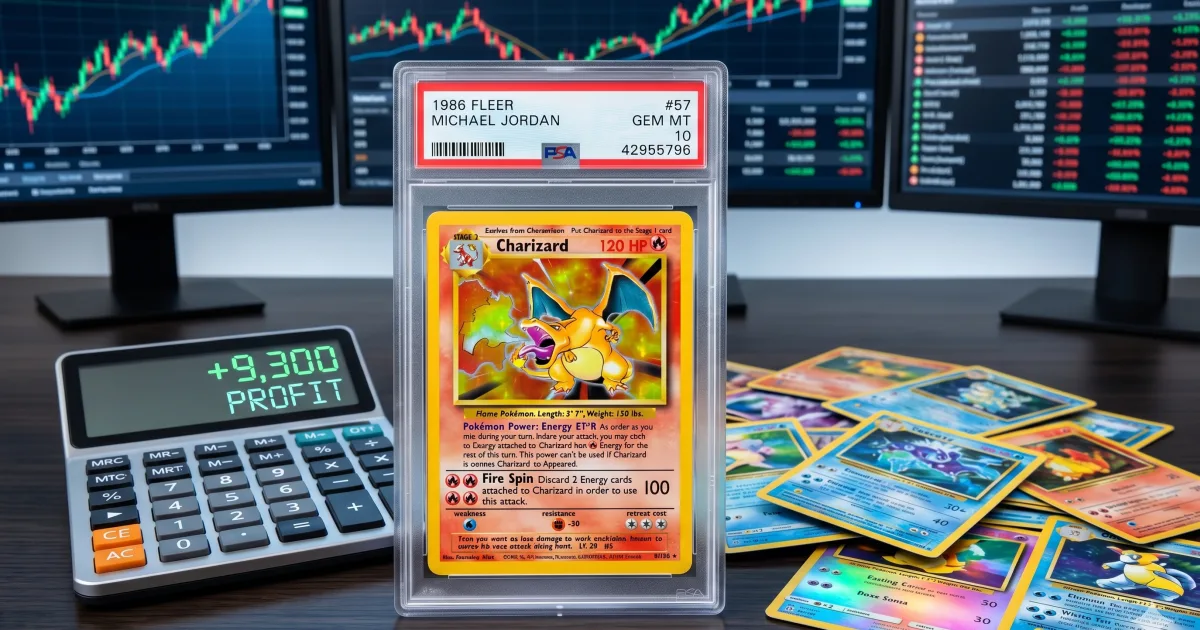
Slap a PSA 10 label on a card and the price jumps 2–5x. That part is real. But "send it in and profit" is not the whole story. Once you factor in grading fees, shipping, turnaround time, and return rates, cards under $50 almost always come back in the red.
This article uses 2026 PSA pricing to calculate the exact break-even point by card price range — so you know when grading actually makes financial sense.
🔍 Detect Pokemon Card Price Gaps in Real Time → GapSense.uk
What Does PSA Grading Actually Cost in 2026?
PSA pricing varies by Declared Value and service tier. Here are the main plans as of 2026:
| Service | Cost/Card | Value Cap | Estimated Turnaround |
|---|---|---|---|
| Value | $25 | $499 | 60–120 days |
| Regular | $50 | $999 | 30–45 days |
| Express | $100 | $2,499 | 10–15 days |
| Super Express | $200 | $4,999 | 5 days |
Then add round-trip shipping: $15–$20 within the US, $30–$50 from Japan. Skip insured tracking and you get zero compensation if something goes missing. Even on the cheapest Value plan, your real cost per card is $40–$75.
A surprising number of traders ignore this hidden cost and send cards in anyway.
What Are the Odds of Getting a PSA 10?
This is the biggest blind spot. Even fresh-pulled pack cards grade PSA 10 at roughly 40–60% in practice. Centering issues, micro edge chips, print defects — cards that look perfect to the naked eye routinely drop to PSA 9 or lower.
So out of 10 cards submitted, maybe 4–6 come back PSA 10. The rest are PSA 9 or below. PSA 9s typically fetch only 30–50% of PSA 10 prices. You pay grading fees on all 10 cards, but only the PSA 10s generate meaningful profit. Miss this structure and you're going to lose money overall.
By Price Range: Where Does Grading Actually Pay Off?
Let's run the numbers. Value plan ($25/card + $20 shipping prorated) = effective $27/card, assuming 50% PSA 10 rate.
| Raw Card Price | Grading Cost | PSA 10 Est. Price | PSA 9 Est. Price | 2-Card Avg P&L |
|---|---|---|---|---|
| $15 | $27×2=$54 | $45 | $20 | +$11 → marginal profit |
| $30 | $27×2=$54 | $100 | $40 | +$86 → profitable |
| $50 | $27×2=$54 | $180 | $65 | +$191 → clearly profitable |
| $5 | $27×2=$54 | $15 | $7 | −$32 → loss |
(※Calculated as a 2-card set: 1 PSA 10, 1 PSA 9. Selling fees of 12.55% not included.)
Once you include selling fees, there's almost no economic case for grading cards with a raw price under $20. At $30+, the risk-adjusted return finally starts to make sense.
There's Another Way to Profit — Without Grading
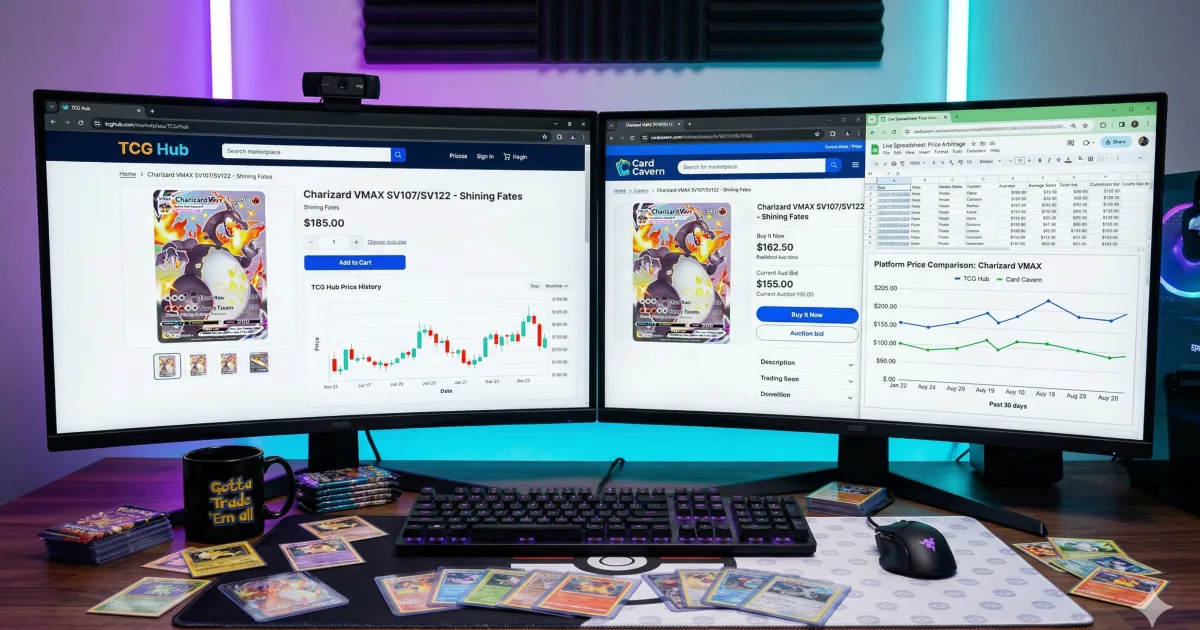
Locking up capital for 2–4 months waiting on grading results is slow. That same money deployed against cross-platform price gaps turns over much faster.
This week's GapSense data shows Umbreon EX (sv8a) spiking +38.2% on eBay, while WEB3 platforms are still listing copies at old prices. These price lags require no grading and can cycle in 1–2 weeks.
Grading is a strategy for holding high-value cards ($50+) long-term. If you want to turn profit quickly, don't forget that 352 arbitrage opportunities exist right now.
Who Should Grade — and Who Shouldn't
Grade if you:
- Can submit 5+ cards at $30+ raw value (prorated shipping lowers your per-card cost)
- Can afford to have capital locked up for 60–120 days
- Can check centering before submitting (a phone app works fine)
Don't grade if you:
- Only have 1–2 cards under $20 to submit → fees will eat you alive
- Need to cash out fast → the market can shift significantly during the wait
- Think "PSA = instant premium" → you haven't run the PSA 9-or-below scenario
Here's a reality most guides gloss over. The biggest risk in PSA grading isn't the cost — it's the time. If the market drops 20% while your cards sit in the queue, even a PSA 10 won't save you. Position risk during the grading window is the single largest hidden cost in card investing.
FAQ
Q: Are other grading companies (BGS, CGC) better value than PSA?
BGS offers plans 10–20% cheaper than PSA, but PSA slabs have higher liquidity in the Pokemon card market and sell faster. CGC is the cheapest but tends to resell lower than PSA. Choose based on sellability, not just cost.
Q: How do I check a card's condition myself before grading?
Shine your phone flashlight at a 45-degree angle to check for surface scratches, then use the official PSA app or a ruler to measure centering (left/right and top/bottom margin ratios). If the offset is worse than 60:40, a PSA 10 is nearly impossible — filter those cards out before submitting.
🔍 Detect Pokemon Card Price Gaps in Real Time → GapSense.uk
🔍 Find Live Pokemon Card Price Gaps Automatically → GapSense.uk
PSA grading · Pokemon card investing · grading · lang:en · card grading costs
Related Articles
![Scarlet & Violet Sets Worth Flipping in 2026 [April Update]](https://res.cloudinary.com/ddrvtv4ul/image/upload/v1776089291/blog/pokemon-tcg/sv-sets-flipping-2026.webp)

Find Live Pokemon Card Price Gaps Automatically
Try GapSense.uk